
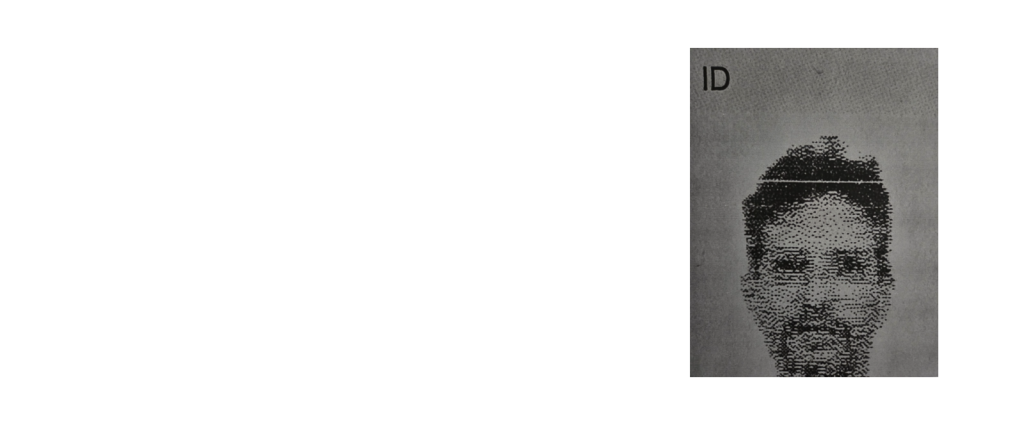
Itay Levin (b. Kiryat Ono, 1975) lives and works in Israel. He began his path in painting and design, eventually focusing on photography. His practice encompasses direct photography, the use of archival materials, and treated photography. As part of this practice, Levin is interested in the spectrum between digital photography and analog processes, as well as questions regarding local identity and culture, believing that these echo broader global and fundamental phenomena. Physical material holds central importance in his work, where signs of time and the photographic process are evident, becoming an essential and inseparable part of the final image.
His works continue his ongoing engagement with “found photography” and local archival materials, often discovered by chance. His projects expand his monochromatic aesthetics and photomontage tactics, based on old negatives—including family albums discarded and found near buildings undergoing urban renewal projects and books that were once common in Israeli homes. Levin’s processed images undergo erasure, blurring, fragmentation, duplication, attachment, and separation – actions that create scenes with a threatening and otherworldly quality. In his essay “The Aesthetics of Disappearance,” Paul Virilio writes that speed accelerates the visual image to the point where it disappears before perception occurs. Levin adopts this aesthetic as an act of erasure, provoking thought on local memory, identity, and temporality.
This aesthetic can also be linked to urban renewal sites, the very places where he locates the raw materials he works with. Levin’s interventions create a cognitive estrangement, disrupting familiar iconography to create new meanings that challenge conventional understanding. Bodies appear in Levin’s work in two ways: as a figure within the image that often partially merges with abstract objects or the environment, moving between presence and absence; and as the viewer’s body, navigating a sculptural experience between prints of varying scales. Small, intimate images invite close observation, while life-size or larger-than-life prints demand physical engagement.
Education, Workshops, and Artist Residencies
- 2025 – 2026: Departures – Exhibition Development Program, 2nd cycle
(Personal mentoring: Tamar Getter, Yaron Atar, Rona Yefman, and Gilad Reich). - 2024 – 2025: Artist Residency, “Black Box” Gallery Jerusalem in collaboration with the Van Leer Institute.
- 2019: Artist workshop focusing on photography, led by Tal Shochat, Ayelet Hashahar Cohen, Gustavo Sagorsky, Michal Braor, and Ron Amir.
- 2003 – 2006: B.A. in Communication and Media Studies, The Open University.
- 1999 – 2002: Visual Communication Department, “Ascola” Tel Aviv – Visual Design and Art
Exhibitions (Selected List)
- 2025: Group exhibition as part of an artist residency, Van Leer Institute, Jerusalem. Curator: Miki Kratsman.
- 2024: Group exhibition, “Black Box” Gallery, Artist Residency, Jerusalem.
- 2023: Solo exhibition, “A Place to Return To,” ArtspaceTLV, Curator: Michal Braor.
- 2016: Group exhibition, Rayko Photo Center, San Francisco, USA: “With Our Own Eyes” – Curator: Ann Jastrab.
- 2015: Group exhibition, Center for Fine Art Photography (C4FAP), Fort Collins, Colorado, USA: “Memories, Stories, Histories”.
- 2015: Exposure Award Collections – Image from the “Positions” project displayed as part of a digital display at the Louvre Museum, Paris
Articles and Publications
- 2026: Windowless, Indie gallery magazine, 200 years for the first photograph
- 2025: 20X20 How I experienced Tzeitlin 5, Erev Rav Magazine.
- 2021: Israeli Species of Spaces, Architectural Absurdity, Medium.
- 2019: Christian Marclay’s video installation The Clock as a training model for Artificial Intelligence, Medium.
Professional Experience
- 2018 – Present: Design Lead, HCL SW.
- 2017 – 2018: Head of Design and Product, Audioburst.
- 2014 – 2017: Design and Product Manager, Kaymera.
- 2011 – 2014: Head of Design and Product, Jerusalem Venture Partners (JVP) Wiser.
- 2009 – 2011: Senior Interaction Designer, UXElements.
- 2007 – 2009: Senior Designer, Samsung Research Centre.
- 2006 – 2007: UI Designer, Comverse.
Media and Recognition
- 2023: Punktum, analog photography magazine – Feature article on the solo exhibition “A Place to Return To”.
- 2018: International Photography Awards (IPA), Honorable Mention for the project “Open Borders”.
- 2016: Haaretz Newspaper: “Exposure to the North”.
- 2015: Editor’s Choice, LensCulture Magazine, Visual Storytelling Awards: “Summer Vacation – We Never Know What Will Bring the Hot Summer Winds”.
- 2014: Editor’s Choice, LensCulture Magazine, Visual Storytelling Awards for the project “Positions”.
- 2014: Haaretz Newspaper: Photography of soldiers waiting during Operation Protective Edge in Gaza.
Patents
- US Patent (US20160334967A1): Sharing of user interface objects via a shared space. Technical methodology for sharing interface elements through common environments.